How India Is Embracing Social-Emotional Learning
““The primary need is psychological safety,” says Ramanathan. “Instead of constantly viewing teachers as being emotionally self-sufficient, creating a space where they can ask for help.””
Jump to Highlight ↗
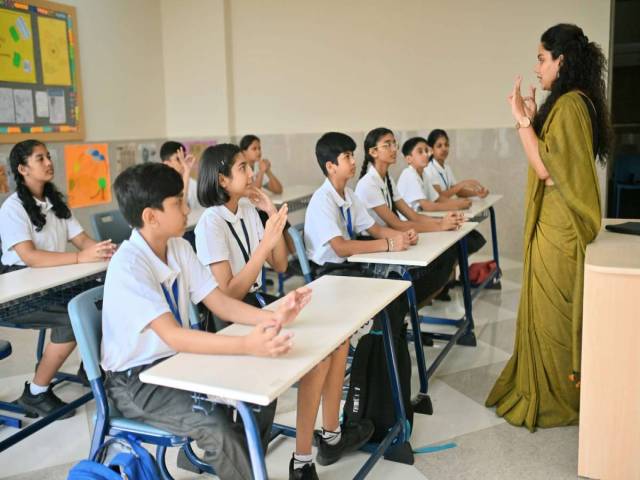
When educators feel emotionally and physically supported, they’re in a much better position to support their students. In India, where the relationship between teacher and student has long been central to education, caring for teachers is essential to sustaining that connection.
India’s education system comprises over 1 million government schools and more than 82,000 government-aided institutions. Serving approximately 167 million children, India administers the world’s largest education system. Increasingly, educators around the world recognize that social-emotional skills like navigating conflict and building healthy relationships are just as essential as academic learning—and India’s own national policies have begun to reflect that shift.
The 2020 National Education Policy calls social-emotional learning (SEL) “a critical aspect of any student’s holistic development.” That’s supported by the National Curriculum Framework, which recognizes the importance of fostering stronger student-teacher relationships to accomplish this approach.
Aditi Ramanthan, a high school biology teacher with almost 20 years of experience, has seen the shift toward more thoughtful discussion and implementation of SEL throughout her time teaching. However, as SEL becomes a more important part of education, the question is not only how to support students, it’s how to support the teachers who are being asked to help them develop these skills.
From this perspective, the future of teaching in India may not be defined only by new curricula or digital tools, but by whether schools can become places where the hearts of teachers are systematically cared for, so they can, in turn, care for the hearts of children.
📝 Your Private Notes & Highlights 🔒 Only visible to you
Log in or create a free account to keep private highlights and personal notes on your stored picks.
Featured on Storesso
Are you the creator of greatergood.berkeley.edu? Share your verified feature badge on your website, or export a custom 4:5 editorial social card for Instagram and X.

Generate a 1080×1350 vertical high-res feature card tailored for social sharing.
Instagram & X Feature Card
Export a polished, high-resolution 4:5 editorial graphic displaying your verified inclusion in the Storesso Discovery Index. Perfect for launch threads, founder updates, and newsletters.